Welcome: Pure Powder Coating

bruce@aabindustrygroup.com +86 13951823978
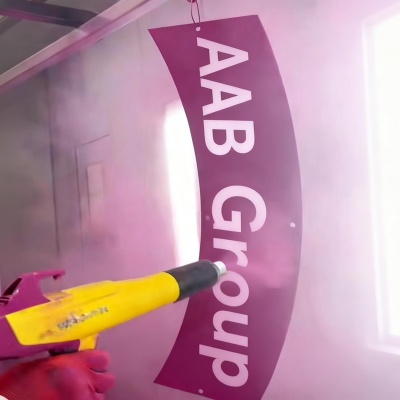
AAB Group is a professional powder coating supplier. Currently, the company’s annual production capacity of various colored powder coatings reaches approximately 20,000 tons. In addition to the domestic market in China, our powder coatings have been exported to many regions including Southeast Asia, the Americas, Europe, and Oceania. Our main powder coating systems include epoxy resin powder coatings, polyester powder coatings, polyurethane powder coatings, super weather-resistant powder coatings, and various functional powder coatings.
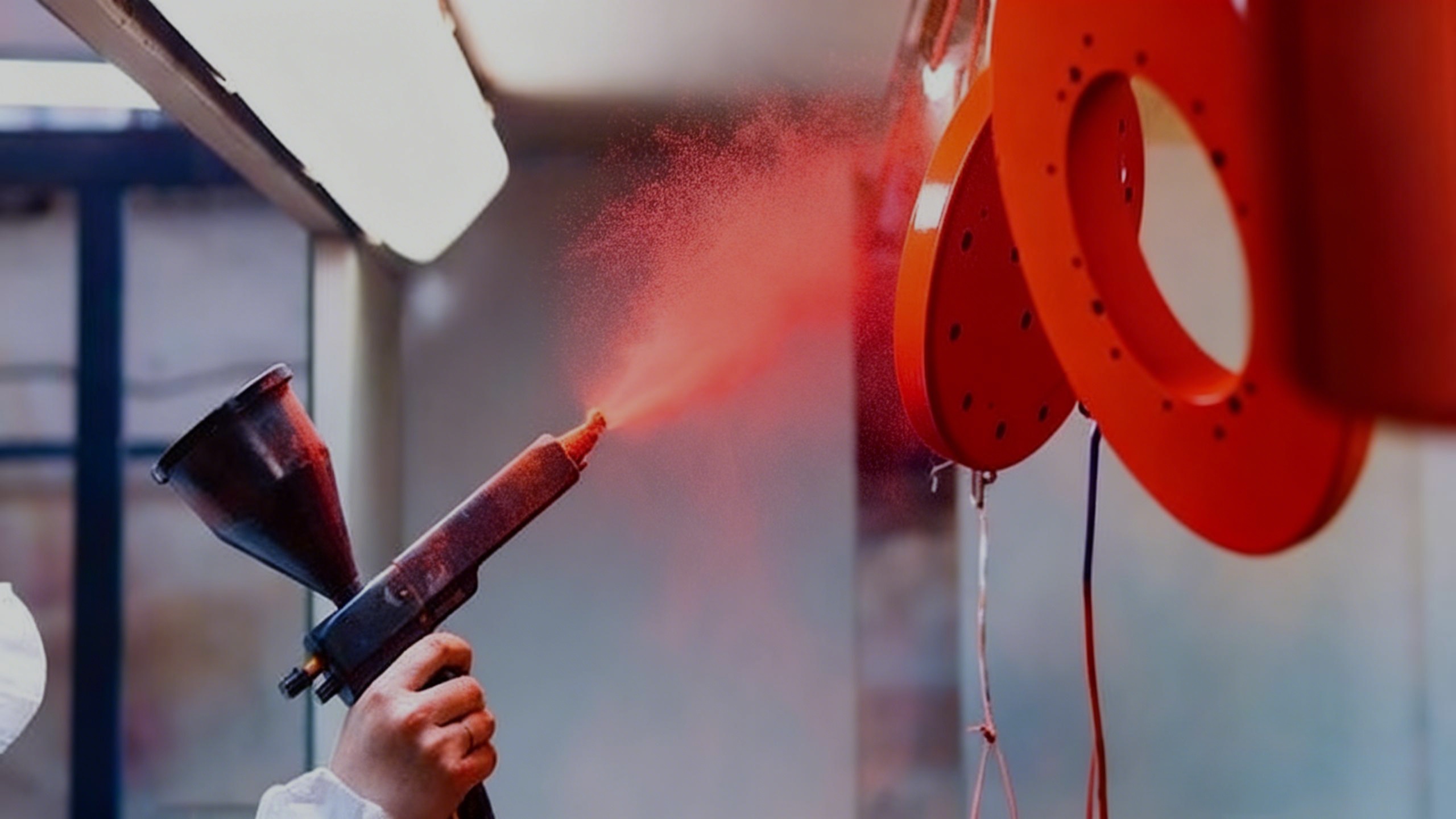
Powder coating is a surface treatment technology that involves evenly spraying electrostatically charged powder onto a workpiece (such as metal, wood, paper, and even some engineering plastics). A high-voltage electrostatic generator creates a high voltage at the tip or inside of the powder spray gun, causing the powder particles to become charged. Under the influence of compressed air and electrostatic forces, the charged powder particles move towards the workpiece. Once the powder coating reaches a certain thickness, the electrostatic repulsion between the powder particles prevents further adhesion to the workpiece. After spraying, the workpiece needs to be cured at a specific temperature for a certain period of time to transform the powder into a solid protective layer. The powder undergoes high-temperature baking, gelation, and reaches its glass transition temperature, where the polymers melt and solidify, forming a dense coating. These coatings provide protective, decorative, and other functional effects for the workpiece.
Thermosetting powder coatings are composed of thermosetting resins, curing agents, pigments, fillers, and additives. In powder coatings, the resin is the core and most critical film-forming substance, which can be understood as the "framework" and "soul" of the powder coating. Different types of resins directly determine the focus of the powder coating's performance, affecting mechanical properties, chemical corrosion resistance, durability, and weather resistance.
Here is an introduction to different types of resin systems:
Epoxy powder coatings offer outstanding mechanical properties, corrosion resistance and chemical resistance.
Polyester powder coatings known for its excellent exterior durability, excellent UV resistance and heat resistance.
Super weather-resistant fluorocarbon powder coatings deliver unparalleled durability, leveraging the extremely strong carbon-fluorine (C-F) bonds to effectively resist erosion from harsh environments such as UV rays, acid rain, and salt spray. It offers excellent color and gloss retention, with a service life of 15 to 30 years. Additionally, it features exceptional self-cleaning properties, making the surface resistant to staining and easy to clean with rainwater.
Epoxy-Polyester (Hybrid) powder coatings combine the strengths of both epoxy and polyester resins, making it suitable for a wide range of applications.
Polyurethane powder coatings provide a smooth and glossy finish. You'll find it in high-quality automotive coatings and wood finishes.
Acrylic powder coatings provide good hardness, excellent chemical and stain resistance, as well as outstanding color and gloss retention.
Curing agent
The curing agent is an important factor in resin modification and film formation, and it directly affects the quality and performance of the powder coating. It should meet the following conditions:
1. Chemical and physical stability: It should not react chemically with the resin or other components during production or storage, and should not agglomerate or form lumps. During spraying and curing at the specified temperature, it should quickly cure, resulting in a smooth, even, and full coating.
2. Non-toxic (or low toxicity), non-irritating: During the curing process, it should not release any unpleasant or harmful odors, ensuring safety and comfort during film formation.
3. Colorless: The curing agent should be colorless, so it does not color the coating or affect the appearance of the final film.
Additives
Powder additives are an important component of powder coatings, and are essential substances for improving certain performance aspects of powder coating production, application, or film properties. Although the amount of additives is much smaller compared to resins, curing agents, and pigments (usually within 5%), their impact on the performance of powder coatings is extremely important. Based on the production and application of these additives, we categorize them into the following three main types:
Texturing Additives
Texturing additives are powder additives developed to conceal the surface roughness of the workpiece or achieve a decorative film effect. They optimize previous complex formulations to provide a more stable artistic decorative effect. The main types include wrinkle agents, hammer-tone agents, sand texture agents, soft texture agents, foaming agents, tortoiseshell pattern agents, dot flower dispersing agents, and 3D pattern agents. The usage of texturing additives is very small, typically in the thousandths range, and they are generally dispersed after extrusion. These additives also have strict requirements for the resin’s properties, such as viscosity, reactivity, glass transition temperature, and impurity content.
Conventional Additives
Conventional additives are essential for the production of standard flat powder coatings. These mainly include leveling agents, gloss enhancers, benzoin, matting agents, and dry powder flow agents. They are used to modify the leveling of the coating, the gloss of the film, and the flow performance of the powder during application, as well as to improve the storage stability of the powder.
Functional Additives
Functional additives are those that improve and expand the functional properties of the coating film, such as UV resistance, anti-aging, improved impact resistance/adhesion, anti-blocking, flame retardancy, and anti-static properties. Functional additives are the fastest-growing and most diverse category among additives, including yellowing agents, UV absorbers, electrostatic enhancers, defoamers, light stabilizers, anti-blocking agents, coupling agents, adhesion promoters, anti-static agents, conductive agents, dispersants, catalysts, thermal stabilizers, flame retardants, and wear-resistant agents.
Pigments
Pigments provide coatings with vibrant colors and help conceal imperfections. Based on their performance and function, pigments can be roughly categorized into four major types: coloring pigments, metallic pigments, functional pigments, and extenders. Coloring pigments are divided into two main categories: organic and inorganic, and they can cover almost all color systems. Metallic pigments primarily include floating and non-floating aluminum powders, various shades of copper gold powders and pearlescent pigments, as well as metallic nickel powder and stainless steel powder, among others.
Fillers
Fillers in powder coatings not only help reduce costs but also play a significant role in improving the performance of the coating products. For example, they enhance the wear resistance and scratch resistance of the coating film, reduce sagging during the melting and leveling of the coating, improve corrosion resistance, and enhance moisture resistance. Common fillers used in formulations include calcium carbonate, barium sulfate, talc powder, mica powder, kaolin, silica, wollastonite, and hollow glass beads. Among these, calcium carbonate and barium sulfate are used in larger quantities, while other fillers typically serve to enhance or supplement specific properties and functions within the system.
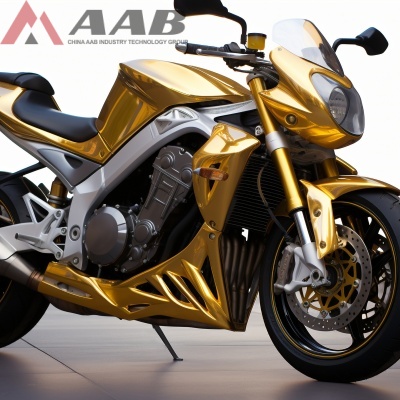
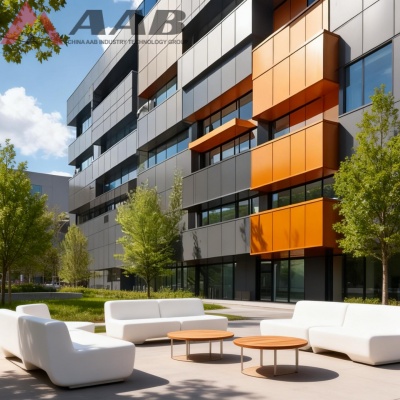
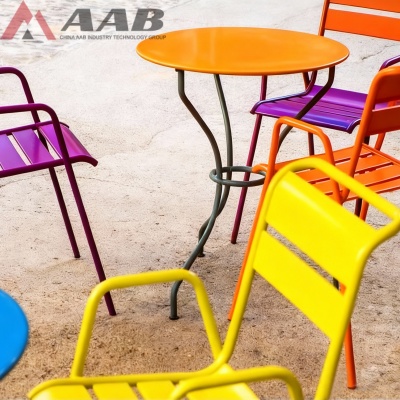
Compared to traditional liquid coatings, powder coatings offer outstanding advantages such as being solvent-free, low in pollution, having high material utilization (excess sprayed powder can be recycled), and superior coating performance. Powder coatings typically exhibit excellent corrosion resistance, wear resistance, and weatherability, while providing a wide range of color, texture, and gloss options. This technology is widely applied in industries such as metal furniture, home appliances, automotive parts, construction materials, and industrial equipment, making it an ideal solution for efficient and environmentally friendly surface treatment.
Established in 2010, our Pure Powder Coatings is a high-tech enterprise specializing in the R&D, manufacturing, and sales of premium powder coating products. In 2025, the company was acquired by China AAB Industry Technology Group and now operates as a subsidiary under the group. We boasts five advanced, large-scale production lines and two specialized R&D pilot lines. More than 20% of its core team consists of senior management and internationally experienced technical professionals. With an annual production capacity of 20,000 tons, the company offers a wide range of high-performance powder coating products.
Feel free to contact us for more information, and we welcome you to visit our factory.
Email: bruce@aabindustrygroup.com
WhatsApp: +86 13951823978
Contact: Bruce Wang
Phone: +86 13951823978
Tel: +86 025-58895705
Whatsapp: +86 13951823978
Email: bruce@aabindustrygroup.com
Add: No. 614, Building 01, Hongyang times business center, Jiangbei national New District, Nanjing, Jiangsu Province 210000
We chat